ART DECO JEWELLERY (1915-1935)
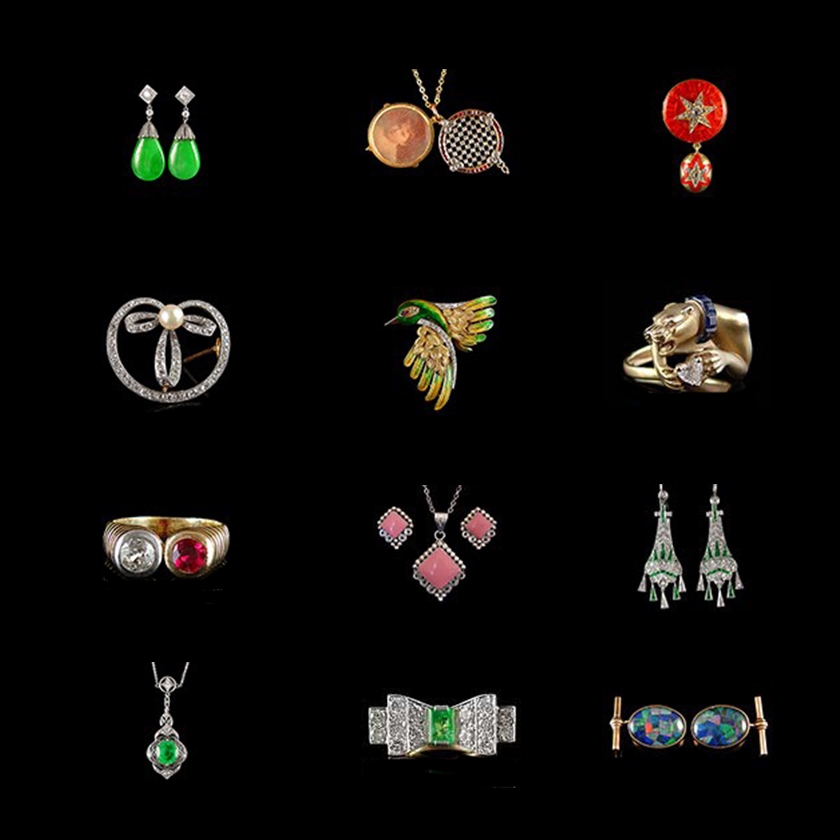
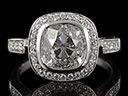
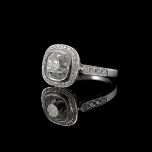
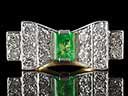
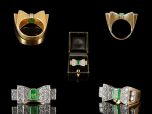
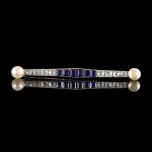
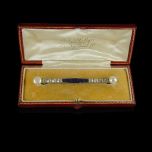
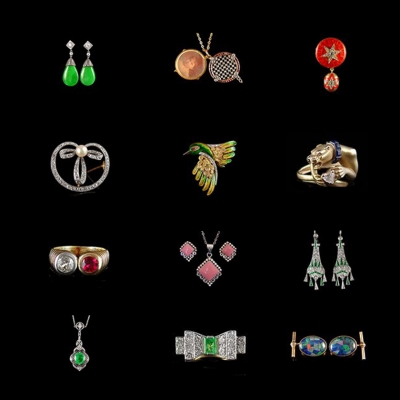
After 1918 the wearing of delicate diamond jewellery had changed. During the war women had worked alongside men and the helpless fluttering ladies had moved onto be businesslike and mature. Therefore Antique jewellery became uncluttered with clean lines, geometric shapes, strong curves and defined lines. Long earrings came back into fashion with the arrival of the short cut boyish hairstyle. Baguette cut diamonds as well as black and white jewellery featuring onyx were in demand. The double clip (two identical dress clips) was used a lot in the form of a brooch. The Brooch could be taken apart and used as two identical dress clips.
1922 – In Egypt the discovery of Tutankhamen’s tomb influenced the period with the use of scarab beetle, turquoise, coral and coloured crystal within the construction of Antique jewellery. Art Deco not only affected the design of jewellery, also changes became in fashion, architecture, interior design, industrial design, visual arts, graphic arts, painting and film. During the 1920’s desirability peaked in Europe and continued strongly in the United States of America through the 1930s.
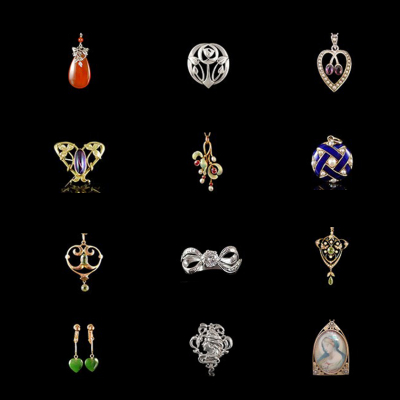
Art Deco jewellery has a stilted, stylized design which was named after the 1925 L’Exposition Internationale des Arts Decoratifs et Industriels Modernes, held in Paris, France. Much of the Art Deco design was a transition from the earlier Art Nouveau, and as with the nouveau epoch, was inspired by the Art of the American Indian, ancient Egyptian, and Greek and Roman architecture.
The early 1920s interest in Cubism and Dadaism as a new Art form, greatly influenced the Art Deco period. The King Tut traveling exhibit, in the 1970s, renewed the craze for Egyptian design jewellery. Additionally, the mysteries of the pyramids and a continuing revival of astrological studies, lent itself to Art Deco designs which in turn were incorporated in the Art Moderne period following 1930.